
Michigan State University journalism or digital storytelling students who contribute to diversity are eligible for a roughly $1,800 fall scholarship to take an environmental journalism class that can count toward graduation requirements.
Environmental expertise or experience is not required.
Eligible students are those majoring in journalism or digital storytelling, contribute to diversity and are enrolled in the fall of 2024. Diverse newsrooms report on environmental stories that otherwise may be missed – stories like those relevant to racial justice, civil rights, the values of Indigenous people or those involving underrepresented groups.
Students could contribute to diversity through their racial, ethnic or cultural identity or through their lived experience. You do not need to be a hunter, camper, ecologist to activist. Environmental issues also encompass urban issues, health issues and social issues like civil rights. The environment is the world’s most important beat – one that cuts across all issues.
The scholarship is for taking JRN 472, Environmental, Science and Health Reporting. For questions, contact Knight Center Senior Associate Director David Poulson, poulsondavid@gmail.com.
To apply:
Before 5 p.m. Sunday, March 17 , 2024, send a message with the subject line “EJ Scholarships” to MSU Knight Center Senior Associate Director David Poulson, poulsondavid@gmail.com.
NOT in the body of the email, but as attachments submit:
- no more than 300 words on how your identity, background, lived experience or other characteristics help you diversify environmental reporting.
- a resume
- copies of or links to up to three stories you’ve produced for publication or class.

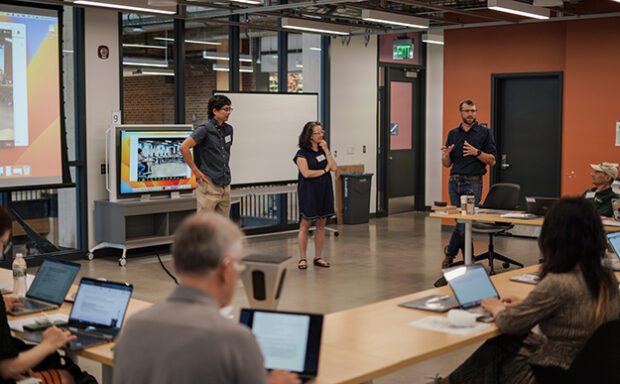 Michigan State University has become the hub of an exciting initiative as the SciComm Identities Project (SCIP) workshop on science communication begins today and runs until the end of the week. A group of 10 SCIP fellows have embarked on a transformative journey, aiming to deepen their understanding of podcasting, gain expertise in media relations, and apply this knowledge to their academic endeavors
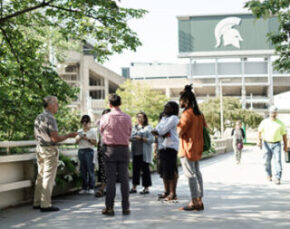 The participants of the workshop spent the day engrossed in a variety of activities designed to enhance their skills. They delved into the realm of storytelling tools, refining their creative writing abilities and engaging in stimulating discussions on applying effective media strategies to effectively communicate their research.
 With the SCIP workshop now underway, the fellows are set to acquire invaluable skills and knowledge that will empower them to effectively communicate scientific concepts and research findings to a wider audience. This initiative is a testament to the commitment of Michigan State University and its partner institutions in fostering a more inclusive and diverse science communication landscape.