
So you’ve landed a pitch: Science writers’ tips and tricks for freelancing
By Emilio Perez Ibarguen
 This is the 4th in a series of articles by Knight Center students who attended the recent annual conference of the National Association of Science Writers.
Financial instability, long gaps between assignments and burnout are challenges many freelance journalists must deal with, whether they’re new to the business or have been writing for decades.
At the recent conference of the National Association of Science Writers in Chicago, freelancers and editors met to discuss how both sides can better understand each other, communicate effectively and, in the process, produce better journalism.
Throughout the panel, the editors and freelancers repeatedly emphasized the value of communication.
Sarah Scoles, a freelancer who has written for WIRED and The New York Times, noted that editors are often happy to give reporters more time to fact check parts of their story, as long as they’re given a heads up.
Scoles, who is also a contributing editor for Scientific American, recalled a recent day when she was asked to fact check details in three separate stories, and subsequently “had a really bad day.”
Had she just reached out to one of those editors and asked for an extra day, Scoles said, she would have saved herself the headache.

Editors and freelance journalists emphasized the benefits of communication at the recent National Association of Science Writers annual conference in Chicago. Credit: Emilio Perez Ibarguen
“Remembering that editors want to help you, since they know you’re people, is a good thing to do,” Scoles told an audience of science journalists, writers and communicators.
Shi En Kim, another freelancer whose work has appeared in National Geographic and Smithsonian Magazine, added that freelancers shouldn’t be scared to be upfront about unexpected challenges in their reporting process.
A source falling through or a specific reporting date changing isn’t the end of the world, said Kim, who goes by her last name, but it’s best to keep the person in charge of editing the final piece in the loop.
Another nugget of advice Kim offered: having a quick 15-minute call to go through questions with your editor can be far quicker, and more effective, than a prolonged email correspondence.
“I try to make the most of that phone call and answer all the questions, get all the things answered as quickly and efficiently,” Kim said.
Communication skills are also helpful for navigating situations where a story grows in scope — sometimes called “scope creep.”
Creating a document at the onset of the assignment that clearly lays out what the freelancer is promising and what the editor is expecting can be helpful for figuring out what does and doesn’t fall within the scope of that assignment, Scoles said.
That document can also help freelancers explain how, if they’re going back out into the field to do more reporting that wasn’t part of the original plan, they’d like to be compensated for that additional work.
“I think that’s mostly always been received well,” Scoles said.
Editors and freelancers on the panel alike lamented that publications can occasionally be slow to pay their writers.
Scoles noted that when a project has taken longer to produce than she expected, she has asked editors to provide an advanced payment — usually equivalent to however much the publication would have paid if they had cancelled the commission.
Scoles said that request works best when writers and editors share a trustful relationship where the editor knows the reporter will stick around to see the project to completion.
“As you can see from the editors here, they want us all to get paid,” Scoles said.
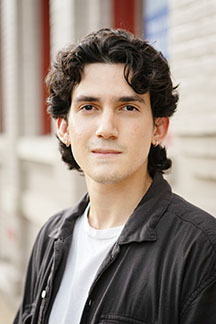
Emilio Perez Ibarguen
