By Eric Freedman
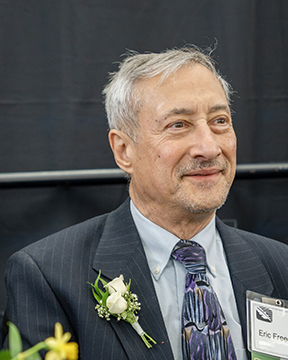
Eric Freedman
I am a journalist. And proud of it.
I hope my readers, whether in newspapers, magazines or online, also feel that’s a title worthy of pride.
True, journalists and the news media are being targeted and maligned, and polls show public trust in the press is declining.
But what isn’t up for serious debate is the essential role that we play.
I appreciate how Dale Anglin, the executive director of the Knight Foundation’s Press Forward initiative, describes the situation — not as a plea to “save struggling journalism” but as a call for the citizenry to “support trusted local news that strengthens our community.”
Anglin cites research showing that more than 90% of Americans surveyed support having independent local news, and two-thirds use local news in making their own everyday decisions.
The traditional message that “local news protects democracy” – which I believe is true – should be reframed as “local news keeps you informed about decisions affecting your taxes, schools and safety,” she told journalism educators at a recent conference sponsored by the University of Vermont’s Center for Community News.
The challenges are great and the stakes are high.
A recent poll by the public opinion company Gallup found that “Americans’ confidence in the mass media has shrunk to a new low, with just 28% expressing a ‘great deal’ or ‘fair amount’ of trust in newspapers, television and radio to report the news fully, accurately and fairly. That’s down from 31% last year and 40% five years ago.”
And another new study of public perceptions of journalists in our digital age by the nonpartisan Pew Research Center found, “As Americans navigate an often-overwhelming stream of news online – some of it coming from nontraditional news providers – what it means to be a journalist has become increasingly open to interpretation.”
“Who Americans see as a ‘journalist’ depends on both the individual news provider and the news consumer,” the center’s report said.
Pew found that more than half of adults surveyed consider people who write for newspapers or news websites or report for or host TV or radio news shows to be journalists. But fewer than half say journalists include those who report on or host news podcasts, write for their own newsletters or make their own videos or posts on social media.
Regardless of definition, 59% of those surveyed said journalists are “extremely or very important to the well-being of society,” while 49% also say journalists have less influence in society than in the past.
The Pew Research Center study reflects that the public wants journalists to be honest, intelligent and authentic and that most consider them well-intentioned and intelligent. Even so, 58% say most journalists are biased and can’t separate their own opinions from what they report on.
In reality, of course, journalists have lives outside their jobs. If they have young children, for example, it’s logical to recognize that they care about what goes on – good and bad – in the schools, vote for school board candidates and want quality educational opportunities.
That doesn’t mean their reporting about local schools’ education can’t be fair, balanced, accurate and ethical.
They also vote, pay taxes, visit national parks, buy health insurance, grow gardens, save for retirement and, well, lots of other things that “ordinary” people do every day.
Does that mean they can’t be trusted to cover state and federal budget debates, rising medical costs, natural resources, the price of flower seeds, pension security and election fraud?
I’ve belonged to AAA for decades – for emergency roadside service like flat tire repairs and for travel discounts – but that doesn’t mean I can’t be objective in covering transportation issues that AAA lobbies about, such as traffic safety and road conditions.
Editor & Publisher, a magazine and website covering the news media industry, asked several editors to comment on the Pew Research Center study.
The editor of the online Colorado Sun, Dana Coffield, described how her newsroom signals its authenticity: “bios of everyone on staff and a way to connect with any of us; clear descriptions of our values and ethics; promising to make corrections; and sharing our reporting methods and data for our bigger-deal stories.”
In releasing its survey results, Gallup said, “With confidence fractured along partisan and generational lines, the challenge for news organizations is not only to deliver fair and accurate reporting but also to regain credibility across an increasingly polarized and skeptical public.”
Yes, I am a journalist, a proud one, and that’s an important part of my mission.
This commentary originally appeared on Capital News Service.
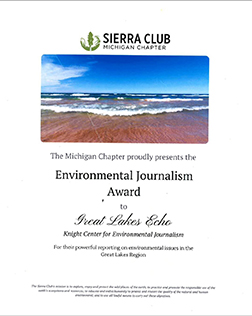 The Knight Center’s regional environmental news service, Great Lakes Echo, has received a 2025 Print Environmental Journalism Award from the Sierra Club’s Michigan chapter.